Agency and Contextualization in Learning
I championed a homework strike in high school.
Not a rebellion—I wasn't trying to make a statement. Truth be told, I was the only participant. I was working 20 hours a week as a dishwasher to help my family (and, let's be honest, to buy a pair of ZZ Top Cavareccis).
I happened to have an interest and aptitude in a few subjects, and what seemed like a reasonable request to me: I don't want to do the incessant worksheets. In exchange, I'll do well on the exams. I didn't care if other people got extra credit or points for doing that work—but for me, it was excess. I kept up my end of the bargain.
I was surprised to still receive a C in those courses.
Turns out, my exam scores and the worksheets I didn't do averaged out to an F, which dragged down the course grade. The system wasn't interested in my deal.
I also had a number of friends who were clever and smart—genuinely smart—but seemed bored or sick of the whole thing. Some became disruptive. But here's what struck me: they weren't failing because they couldn't think. They were struggling because the system had no shape for them. The one-size-fits-all classroom seemed to reward "sit-stillers" and penalize everyone else for being different.
Through all of this, I realized something ironic: the school's entire system was designed around worksheets and standardized timelines, with zero regard for the actual humans in front of them. My homework strike was just me saying, "This doesn't work for my life—and it's not working for a lot of other people either."
Looking back, I was asking for two things: agency—the ability to make choices about how I spent my time—and recognition—that I was a person with competing needs and different ways of thinking, not just a slot to fill in a standardized system.
Years later, I watched 50+ disenfranchised youth in Milwaukee go through a nine-week training program at Homeboyz Interactive and walk out with jobs, confidence, and a real future. Not because we had the perfect curriculum. Not because we had fancy software. But because we understood what my high school didn't: people will do remarkable things when you give them agency and context.
Over the next 15 years, that principle—agency and contextualization—became the north star for how I've built products, led teams, and sparked movements.
The Story: Homeboyz Interactive
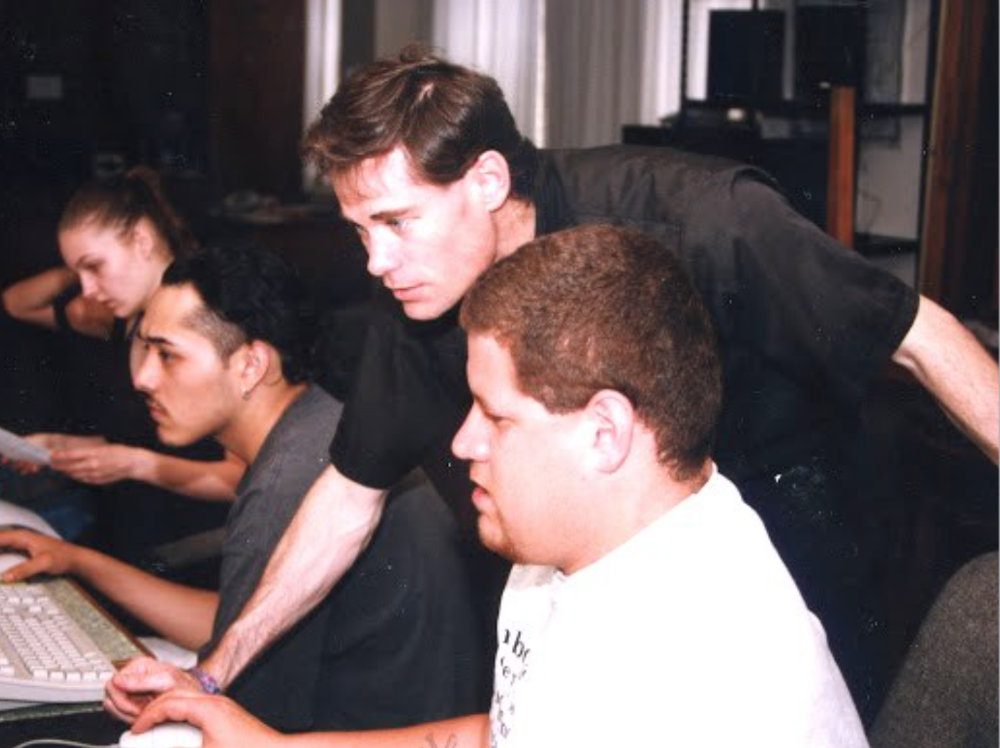
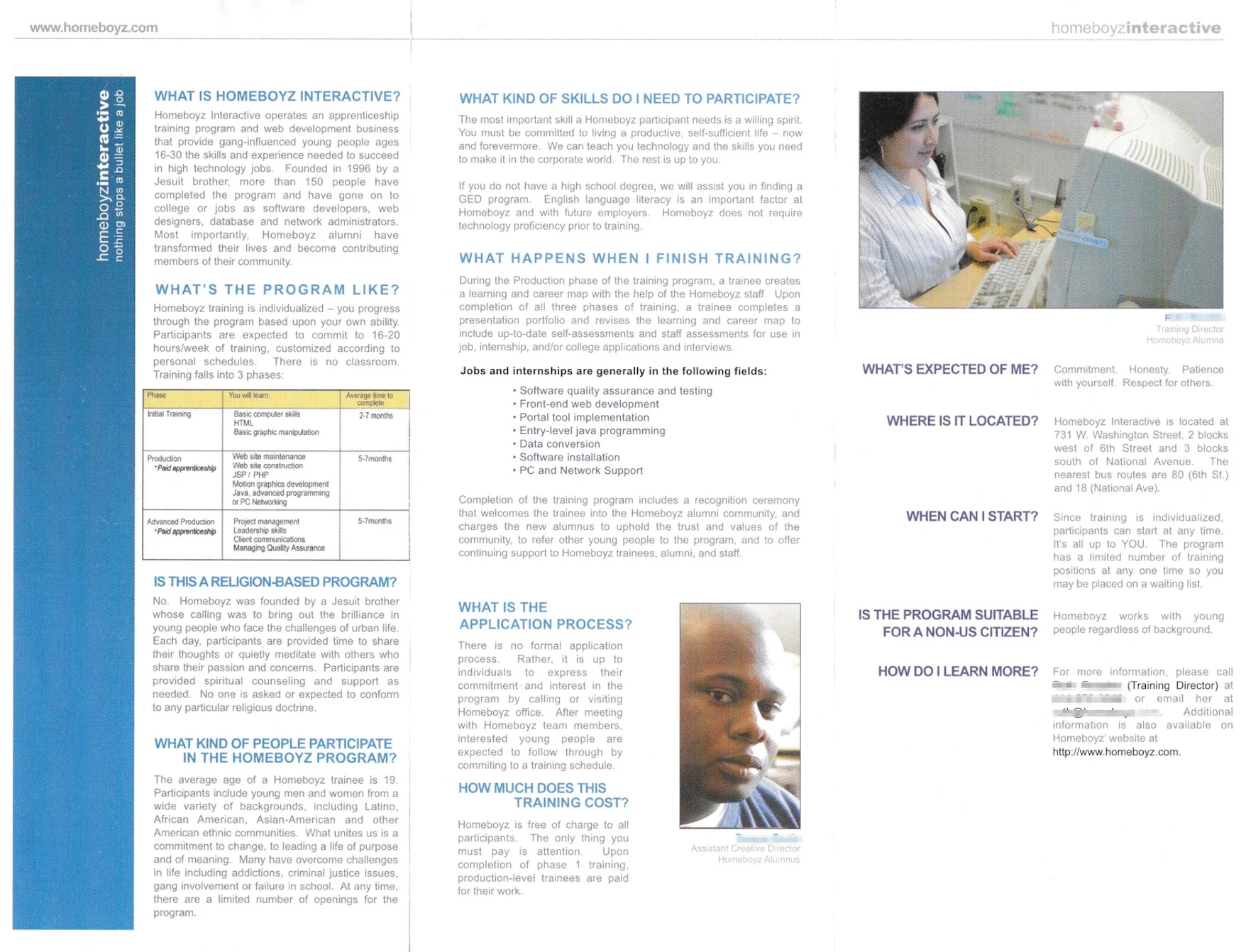
Homeboyz was a nonprofit in Milwaukee with a powerful slogan: "Nothing Stops a Bullet Like a Job." We provided free training to disenfranchised urban youth in a unique project-based learning community.
Trainees would enter and work with a training coordinator to figure out their interests and build something with those interests—most often coding software, designing graphics, or building a computer. These personal projects were supported by curated video tutorials and exercises we found and created. (This was 2002-2005, remember—ten years before Khan Academy and CodeAcademy existed.)
But the real magic wasn't the content. It was the structure:
Agency: Trainees chose their projects. They weren't told what to build.
Real context: Their work led to real outcomes. A website you coded could be live tomorrow. A computer you built could be sold.
Immediate feedback: You didn't wait for a grade six weeks later. You saw if your code worked.
Real stakes: If you didn't learn, you didn't eat the apprenticeship wages. If you did learn, you had a job.
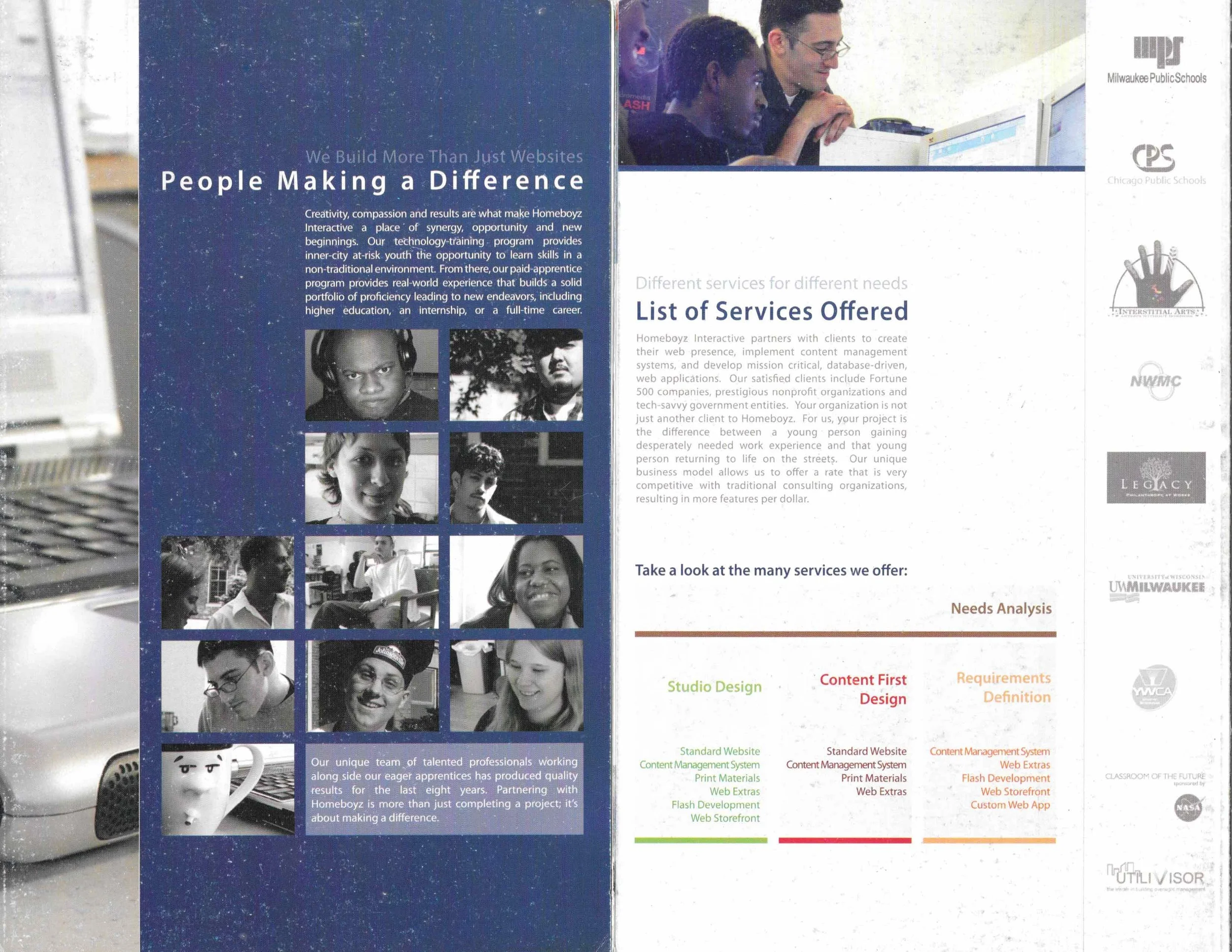
Within one to three months, strong trainees could move into the apprenticeship program—which meant working on real projects from real clients paying real money. They'd design branding, build websites, set up IT infrastructure. And they'd get paid a decent wage for the work they completed.
What struck me most wasn't the content we taught. It was the conditions we created—agency (choosing their path), real context (building things for real people), and trust (we believed they could do it)—that made the learning stick. When those conditions existed, trainees moved from survival mode to mastery. They owned it.
The Insight
I realized this methodology—agency + context—was exponentially more powerful than traditional instruction. But it was hard to manage and nearly impossible to scale. It required trust, real projects, personalization, and honest feedback. Most technology made these harder, not easier.
So in 2005, we built Project Foundry—initially just for Homeboyz's internal use. We needed a way to manage all these personalized workflows, account for what was learned, and showcase real products students had created.
But something unexpected happened.
After Homeboyz's founder moved on, my co-founder Kevin Kirkland and I purchased Project Foundry and began a new adventure. We discovered we weren't just building software. We were building a catalyst for a movement.
Around the same time, we connected with an emerging wave of like-minded innovators—teachers, school administrators, school board members, and investors who all believed the same thing: that students learn better when they have agency and are building real things in real context.
They weren't chasing the same old ed-tech playbook. They were asking: What if we redesigned school entirely around these principles?
The Proof
From one school in 2006 to 300+ schools across 29 states. 40,000+ students and teachers. 450,000+ learning experiences.
But the real metric? Hundreds of educators telling us that Project Foundry didn't just change their workflow—it changed how they thought about teaching. Thousands of students who, for the first time, felt like their work actually mattered.
And the unconferences. We hosted 10+ unconference-style professional development events where teachers designed the agenda based on what they actually wanted to learn. Attendees called them the best PD experience they'd ever had. That model caught fire with other educators (as Mike Ritzius, an original edCamp co-founder and once Project Foundry customer, later attributed in a 2012 newsletter, my encouragement and early financial support made edCamp possible, which was the first). edCamp took the unconference approach and scaled it into a global movement with 100+ events. But the seed was already planted: teachers will show up for learning experiences where they have agency.
The Jagged Human (and Multiple Intelligences)
Here's what I learned: people are jagged.
Author Todd Rose calls it "the jagged human"—the idea that we're all uneven. We're not one-dimensional. You might be brilliant at coding but struggle with public speaking. You might be gifted at building relationships but mediocre at spreadsheets. You might be a natural at sales but hate processes. Howard Gardner revealed something paralell and similar decades earlier with his work on multiple intelligences—the recognition that intelligence itself isn't a single thing. Some people think spatially, others linguistically, others interpersonally. The template assumes one type of smart. Reality is far messier.
Constructivist learning theory reinforces this: people don't absorb knowledge passively. They actively construct it through experience, reflection, and interaction. When you design for agency and context, you're designing for how humans actually learn. And when you're helping educators or organizations adopt this approach, the Concerns-Based Adoption Model (CBAM) reminds us that change isn't linear—people move through stages of concern (awareness, personal, management, consequence) at different paces. Understanding where someone is in that journey determines whether they're ready to embrace agency or still need reassurance.
The old system—whether it's school or traditional corporate training—pretends we're smooth. It treats us as if we fit the same template. But we don't. We're all jagged in different ways, with different kinds of intelligence and different ways of processing the world.
When you give people agency (the ability to lean into their strengths), context (real problems that matter), and trust(belief that they can figure it out), something shifts. The jagged human becomes an asset, not a liability. The person who thinks spatially suddenly excels. The interpersonal thinker leads. Everyone has a shape that fits somewhere.
I believe creating entrepreneurial, lifelong learners—and honestly, engaged teams and organizations—involves recognizing that:
Everyone has different contexts. One size does not fit all. Your role as a leader is to understand what matters to the person in front of you.
Agency is non-negotiable. People don't grow under control; they grow when trusted with real decisions and real stakes.
Depth unlocks breadth. When someone goes deep on something they chose, they naturally ask bigger questions. They become unstoppable.
Intrinsic motivation outlasts extrinsic rewards. Cash and grades work until they don't. Purpose, autonomy, and mastery? Those stick.
Why Tell You This?
Because whether you're building a product, leading a team, designing a curriculum, or trying to spark change in your industry—the principles are the same.
The products, companies, and movements that stick aren't the ones with perfect features or the biggest budgets. They're the ones built on a foundation of trust, real stakes, and human agency.
If you're trying to catalyze something—whether it's a learning movement, a company culture, an ecosystem shift, or a new way of working—start here:
Give people agency. Give them real context. Trust them with something that matters. Everything else follows.
The Voices That Shaped This Thinking
I've learned from organizations that understood this deeply:
EdVisions Schools — pioneers of project-based learning and student agency
Big Picture Learning — designed entire schools around personalized pathways
Senior Project Center — understood that real work is the best teacher
Project ARC — building authentic, realworld, complex, human-centered learning
They all built trust networks of educators willing to take risks because they believed in the vision. That's what a movement looks like.
The Question for You
What would change in your space—your school, your company, your industry—if you applied this thinking?
But I also know the pushback. How do you give people agency when compliance is non-negotiable? How do you ensure everyone's picking up the things that actually need to get done, not just what feels good? How do you balance autonomy with accountability?
These are the real questions. And they don't have one-size-fits-all answers. But here's what I've learned: the constraint itself is often the context. When people understand why something matters—the real stakes, the real purpose—they find ways to own it even within limits. Agency isn't anarchy. It's clarity about what's non-negotiable and trust that people will figure out how to thrive within those boundaries.
What would it look like to give people that kind of agency in your world?